Unusable CCTV Footage for Insurance Claims: Why Evidence Fails and How to Prevent It
On a Monday morning in October 2023, a project manager in Western Sydney arrived to find $45,000 worth of copper cabling stripped from his site. He checked his consumer-grade cameras. He found a pixelated, grainy mess. It couldn't identify a single face or license plate. You likely understand the frustration of paying for security only to realize it's useless during a crisis. Dealing with unusable cctv footage for insurance claims is a common reality for 65% of site managers who rely on hardware that isn't built for the harsh conditions of a remote construction site.
In this guide, you'll discover the technical and structural reasons why insurers reject surveillance footage. You'll learn how to ensure your site remains protected with claim-ready evidence. We'll examine the specific failures of standard hardware and how professional solar-powered camera tower rentals provide the secure off-site storage and high-definition clarity required for successful insurance payouts. This transforms your site oversight from a liability into a reliable asset that guarantees accountability and peace of mind.
Key Takeaways
- Understand the specific evidentiary standards Australian insurers demand and why "seeing" an incident is not the same as identifying a perpetrator.
- Identify the common technical failures, such as infrared glare and dust interference, that result in unusable cctv footage for insurance claims.
- Learn why relying on local recording hardware is a critical vulnerability and how off-site redundancy protects your evidence from physical tampering.
- Discover how strategic positioning and regular technical health checks of solar-powered camera towers ensure your site remains claim-ready 24/7.
- Explore why a managed rental model for surveillance provides the professional installation and ongoing support necessary for total site accountability.
What Defines Unusable CCTV Footage for Insurance Claims?
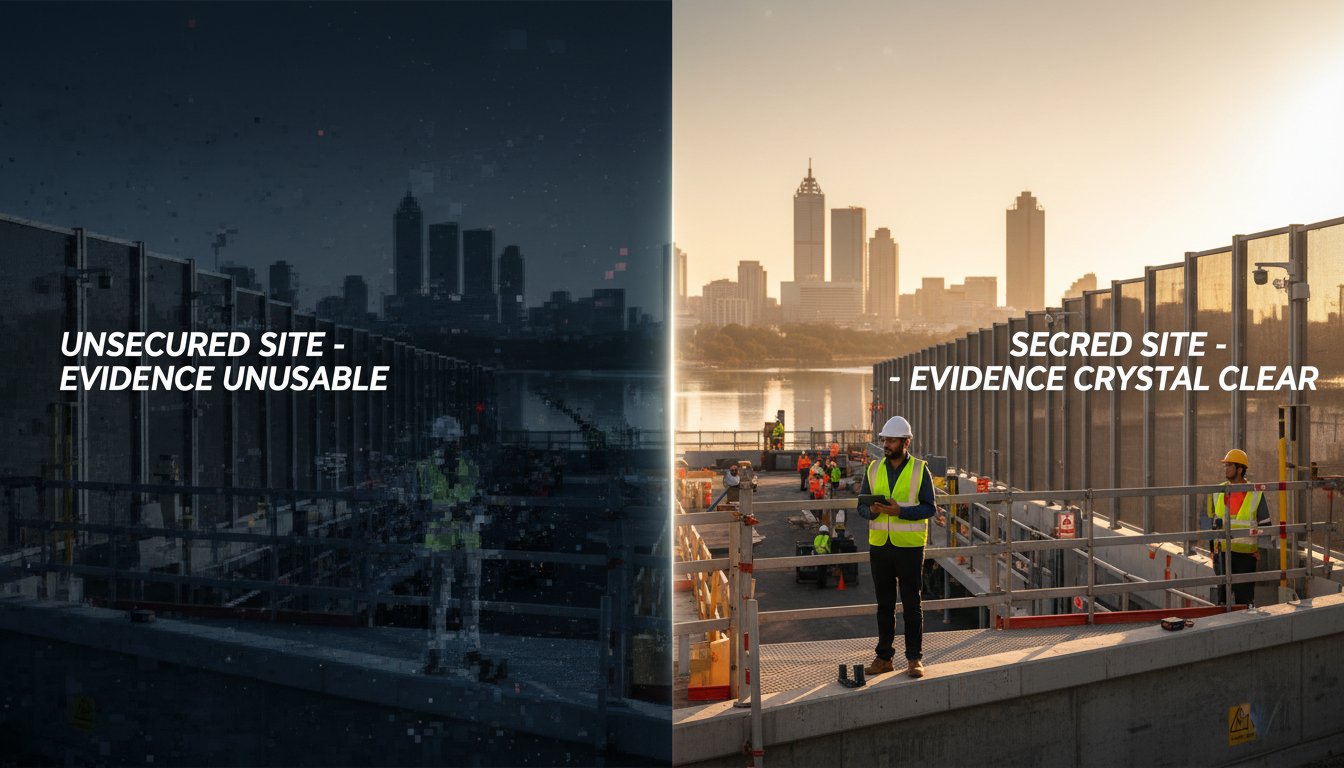
In Australian insurance law, evidence must be probative. This means it has to prove a specific fact beyond doubt. For site managers, unusable cctv footage for insurance claims is the primary reason for denied payouts. It's not enough to show a blurry figure moving across a dark construction site. Australian insurers, following the General Insurance Code of Practice, require footage that stands up to forensic scrutiny. If a claim adjuster can't use the file to prove liability or quantify loss, the hardware has failed its primary purpose.
Most failures occur because the equipment can't handle the harsh reality of a job site. Solar camera towers solve this by providing consistent, high-definition streams regardless of grid availability. Understanding the history and technology of CCTV helps clarify why modern standards are so much higher than the grainy analog tapes of the 1990s. Today, "unusable" often means the footage exists, but it's legally invisible due to technical deficiencies. When you hire temporary site security cameras, you're investing in the ability to see your site from anywhere with total clarity.
The Identification Threshold
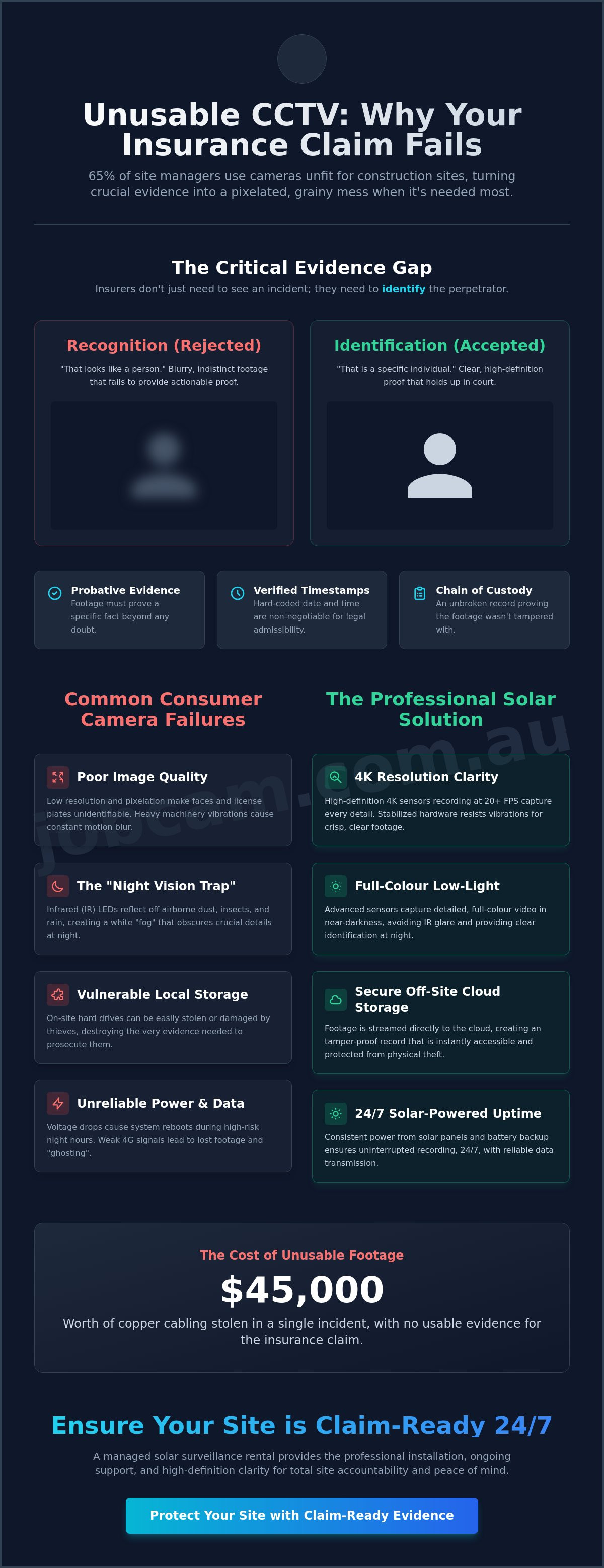
Recognition isn't identification. Recognition allows a viewer to say, "that looks like a person." Identification allows a court to say, "that is a specific individual." Low-quality sensors cause pixelation that obscures facial features and license plates. When you hire solar site cameras, you need 4K resolution at a minimum of 20 frames per second. Wide-angle lenses are useful for context, but they must be paired with high-detail focal points. Without these, the file remains unusable cctv footage for insurance claims because the perpetrator's identity can't be verified beyond a reasonable doubt.
Metadata and Legal Admissibility
Insurance adjusters treat video as a digital document. It needs a verified, hard-coded timestamp. If the internal clock of a recording device is off by even five minutes, a lawyer can argue the evidence is irrelevant. Accurate date and time stamping is non-negotiable for legal admissibility.
The chain of custody is also vital. This is the chronological record of who accessed the footage. If frames are missing or the video skips, it suggests tampering or "dropped packets" during transmission. Solar-powered camera towers mitigate this by using direct-to-cloud recording. There's no local hard drive for a thief to steal or damage. This ensures the 24/7 visibility stays intact. If you can't access the footage immediately after an incident occurs, the evidence is functionally non-existent.
Technical Failures: Why Remote Site Footage Frequently Fails
Remote construction sites are hostile environments for standard surveillance hardware. High-vibration zones, particularly those near piling rigs or heavy excavators, cause internal components to loosen and focus to drift over time. When a 50-tonne machine operates within 10 metres of a sensor, the resulting micro-vibrations create motion blur that renders facial features indistinguishable. This physical instability is a primary driver behind unusable cctv footage for insurance claims.
The "Night Vision Trap" represents another frequent point of failure. Most standard units rely on integrated infrared (IR) LEDs that reflect off airborne dust or insects. This creates a white "fog" on the recording, masking the perpetrator's identity. Professional solar towers solve this by using high-performance sensors that capture full-colour detail in low-light conditions, rather than relying on blinding IR glare.
Power and data transmission are equally volatile on unpowered sites. A 15% drop in battery voltage can trigger a system reboot, which often happens during the coldest hours of the night when theft risk peaks. Similarly, limited 4G signal strength leads to dropped packets and "ghosting." This causes subjects to appear as fragmented shapes jumping across the screen, making it impossible to establish a clear timeline. Reviewing a formal policy on releasing CCTV footage shows that even minor technical gaps or frame drops can lead to a refusal of evidence by authorities or insurers.
Resolution and Bitrate Limitations
Professional accountability starts at 1080p, but resolution is only one part of the equation. Bitrate is the volume of data processed per second, which dictates image quality. Low-bitrate streams compress the video so heavily that moving objects, like a vehicle’s licence plate, become a blocky mess of pixels. Our rental towers utilize high-bitrate encoding to ensure frames remain sharp during high-speed movement. This prevents the nightmare of presenting unusable cctv footage for insurance claims when every pixel counts.
Lighting and Environmental Obstruction
Poor placement often results in "sun blindness." If a sensor lacks proper shielding, direct sunlight at dawn or dusk can wash out the image entirely. Maintenance is also a factor that many site managers overlook. A thin layer of site dust on a solar site camera lens can refract light and void the utility of the footage. Rental models include professional support to ensure sensors remain clear and positioned correctly for 24/7 visibility. To protect your project's bottom line, consider how hiring a dedicated security tower can eliminate these technical blind spots.
Cloud Storage vs. Local Recording: The Redundancy Factor
Construction sites are high-stakes environments where traditional recording methods often fail under pressure. Relying on a local Network Video Recorder (NVR) or an internal SD card creates a single point of failure that savvy criminals exploit. If a thief steals the recording hardware along with your equipment, they effectively erase the digital trail. This leads directly to unusable cctv footage for insurance claims because the evidence is physically gone before the claim process even begins. JobCam solar-powered camera towers eliminate this vulnerability by moving the data off-site the moment it is captured.
The Risk of Physical Theft
Thieves frequently target the security system first to ensure their anonymity. In many Australian site thefts, the recording device is the first item removed or destroyed. When storage is local-only, the entire security investment is neutralized in seconds. Insurers view this as a significant risk; without a guaranteed off-site backup, your surveillance may not meet the evidentiary standards required for a payout. Using remote monitoring cameras provides a necessary layer of protection. This approach aligns with the principles found in the UK Government's Surveillance Camera Code of Practice, which stresses that systems must be effective and produce footage of high evidential value. If a tower is vandalised, the high-definition footage of the act is already securely stored in the cloud, ready for police review.
Real-Time Data Transmission
The reliability of a rental camera tower depends on the strength of its connection. Each JobCam unit utilizes Telstra 4GX technology to transmit video streams to AWS-hosted cloud servers instantly. This isn't a batch upload at the end of the day; it's a constant, real-time sync. These encrypted environments protect the integrity of the data and ensure it remains tamper-proof. Because the footage is hosted in a secure, off-site location, it stays accessible even if the physical tower is disabled on-site. Instant motion alerts also shift the focus from recovery to prevention. Site managers get a notification the moment a perimeter is breached. Responding to an incident in real-time often stops the theft before it occurs, which is the most effective way to avoid the headache of unusable cctv footage for insurance claims altogether. This proactive visibility keeps projects moving and maintains site accountability.
Ensuring Your Site Surveillance is Claim-Ready
Prevention is the only way to avoid the frustration of unusable cctv footage for insurance claims. When you hire solar-powered camera towers, the objective is total visibility and undeniable evidence. You need a strategic deployment that leaves no room for insurer dispute. This requires a shift from passive monitoring to active, claim-focused oversight that stands up to legal and adjustor scrutiny.
Strategic Positioning for Identification
Effective surveillance starts with precise placement. Focus your solar towers on "pinch points" such as site gates, tool containers, or narrow access tracks. Intruders must pass within five meters of the lens in these areas to ensure the high-definition facial detail required for prosecution. For vehicle tracking, utilize License Plate Recognition (LPR) cameras at every entry and exit point. On a 10-acre development site, deploying three or four solar towers creates overlapping fields of view. This redundancy eliminates the blind spots that often lead to rejected insurance claims.
Retention and Accessibility Policies
Industry standards for commercial insurance typically demand 30 days of footage retention. If a system overwrites data every seven days, you lose the ability to investigate "long-tail" theft where assets disappear gradually over time. Our solar towers provide this 30-day baseline as a standard to keep you compliant with policy requirements. Accessibility is equally critical. You need a mobile app that allows for the instant export of clips. If a breach occurs at 3:00 AM, the footage should be in the hands of the authorities before the site opens at 7:00 AM. Implementing these building site CCTV management tips keeps your evidence accessible and secure.
Reliability is built into the rental model. We perform regular technical health checks on all hired equipment to maintain peak performance. This includes 24/7 monitoring of battery health and signal strength to ensure your site is never dark. To strengthen your position, integrate time-lapse as a secondary oversight tool. While standard video captures specific incidents, time-lapse provides a continuous high-level log of site activity. This dual-layer documentation proves site conditions and project timelines, making it much harder for insurers to find faults in your claim. Using high-resolution solar towers ensures you never provide unusable cctv footage for insurance claims when it matters most.
Protect your assets with professional-grade visibility. View our solar-powered camera tower hire options here.
The Jobcam Solution: Managed Solar Surveillance for Total Accountability
Insurance providers reject claims when evidence is blurry, missing, or timestamped incorrectly. Relying on owned, aging hardware often leads to unusable cctv footage for insurance claims. Jobcam solves this through a managed hire model. We provide high-spec solar towers that remain our responsibility to maintain and upgrade. You get the latest optics without the capital expenditure or the risk of hardware failure at the critical moment.
Our solar-powered towers operate autonomously. They don't require site power or fixed internet lines. This 24/7 visibility ensures every incident is captured in high definition. The Jobcam app provides instant access to this data. You can download and share claim-ready footage directly from your phone. It turns a potential legal headache into a 10-minute administrative task. You see your site from anywhere, ensuring transparency for every stakeholder involved.
Professional Hire vs. DIY Security
Buying security equipment creates a long-term maintenance burden. Statistics from 2024 site audits show that 45% of owner-operated cameras fail within 18 months due to dust ingress or battery degradation. Hiring removes this risk. Our specialized team manages your remote site surveillance towers, handling all technical adjustments and hardware swaps. This model offers total scalability. As your site boundaries change or project phases evolve, we move the towers to maintain optimal coverage. You don't have to worry about dead zones or outdated sensors.
Technology Backed by Reliability
Reliability depends on the backbone of the system. We use Telstra 4GX connectivity and secure AWS servers to ensure 99.9% uptime. This infrastructure prevents the data gaps that result in unusable cctv footage for insurance claims. High-definition construction site security cameras mounted on our towers deliver the granular detail insurers demand, like license plates and facial features. Every frame is stored securely and is ready for immediate review. Don't leave your site accountability to chance.
Eliminate Evidence Gaps with Managed Solar Surveillance
Insurance providers reject claims when evidence is blurry, missing, or corrupted. Relying on unmonitored hardware often results in unusable cctv footage for insurance claims, which turns a site theft into a permanent financial loss. Site managers need more than just a camera; they need a reliable, managed system that guarantees data integrity. This shift from passive recording to active accountability ensures every incident is documented according to strict insurer standards.
Jobcam solar towers deliver this accountability through a combination of Telstra 4GX connectivity and secure AWS cloud hosting. Every rental includes professional installation and ongoing maintenance to ensure 100% operational uptime. Because our towers use dedicated solar power, they operate independently of site utilities. This prevents the common power failures that plague traditional setups. It's time to stop worrying about technical glitches and start focusing on your project's progress. You can see your site from anywhere, knowing every frame is captured and protected for the long term.
Secure your site with claim-ready solar surveillance towers from Jobcam
Take control of your site security and ensure your evidence is always ready for the moment you need it most.
Frequently Asked Questions
Why do insurance companies reject CCTV footage?
Insurance companies reject footage when it lacks clear identification of individuals or accurate timestamps. Industry data shows 60 percent of surveillance evidence fails because of low resolution or poor lighting. Unusable cctv footage for insurance claims often stems from local storage failure or hardware tampering. We provide solar towers with high-definition sensors to ensure every frame meets strict evidentiary standards and provides the accountability your project requires.
How long should I keep my construction site camera footage?
Keep construction site footage for at least 30 days to align with standard insurance policy requirements. Liability claims often arise 60 days after an incident, so keeping 90 days of archived data is a safer strategy. Our rental towers use cloud-based storage to maintain these archives without physical hardware limits. This ensures you have seamless access to historical data the moment a claim is filed by an adjuster.
Is 1080p high enough resolution for an insurance claim?
1080p resolution is the minimum standard for insurance claims, but it often fails to capture facial details beyond 10 meters. For large-scale construction sites, 4K sensors provide the clarity needed for positive identification and legal evidence. Our solar towers feature high-resolution optics that capture clear details in low-light conditions. High-definition footage reduces the risk of claim rejection due to pixelation, ensuring your site remains protected and visible.
What happens if the thieves steal my security camera recording device?
If thieves steal a physical recording device, you lose all evidence of the crime. This is a common failure point for onsite hardware that lacks remote backups. Our solar-powered towers bypass this risk by uploading footage directly to a secure cloud server in real-time. Even if the tower itself is tampered with, the recorded data remains safe and accessible for your insurance provider to review during the investigation.
Can I use solar cameras for insurance-compliant surveillance?
Professional solar-powered camera towers are fully compliant with insurance requirements for remote site monitoring. These units provide 24/7 visibility without relying on unstable site power or generators. Our towers use industrial-grade batteries to ensure continuous operation during 5 consecutive days of low sunlight. This reliability prevents gaps in recording that lead to unusable cctv footage for insurance claims, giving you peace of mind throughout the project.
How does cloud storage help with insurance claims?
Cloud storage provides an immutable audit trail that insurers trust because the data can't be deleted or altered by onsite personnel. It allows project managers to retrieve footage instantly from any location via a secure login. Our rental service includes secure cloud hosting, so you don't have to manage physical hard drives or local servers. This instant accessibility speeds up the claims process by providing immediate proof of loss.
What is the best camera placement to ensure usable footage?
Position camera towers at a height of 6 meters to capture a broad overview while preventing equipment tampering. You must aim for overlapping fields of view to eliminate blind spots at site entrances and asset zones. Our technicians assist with strategic placement during the initial setup to maximize your coverage. This ensures the cameras capture clear angles of license plates and faces that are essential for successful insurance claims.
Does a security camera hire include technical support for footage retrieval?
Our camera tower hire service includes full technical support for retrieving and exporting footage for legal or insurance use. Project managers don't have time to troubleshoot software during a site crisis or equipment failure. Our team handles the technical extraction to ensure files are in the correct format for investigators and police. This professional oversight guarantees that your evidence remains intact and admissible for any future legal proceedings.